How to tell if your sewer line is failing — before it becomes an emergency
Sewer line problems don’t usually announce themselves with a dramatic flood. They start quietly — a slow drain here, an odd smell there — and gradually get worse until you’re dealing with a full backup or a collapsed pipe.
The good news: if you know what to look for, you can catch sewer issues early, when repair options are simpler and cheaper. Here are the eight warning signs that something’s wrong with your sewer line.
1. Multiple Drains Are Slow or Backing Up at Once
A single slow drain is usually a localized clog — hair in the shower drain, grease in the kitchen sink. But when multiple drains in your home are sluggish at the same time, the problem is almost certainly in the main sewer line.
What to watch for:
- Toilet, shower, and sink all draining slowly
- Water backing up in the tub when you flush the toilet
- The washing machine draining causes gurgling in nearby fixtures
If one drain is slow, try a plunger or a drain cleaning. If several drains are slow, it’s time to call a plumber.
2. Gurgling Sounds from Drains or Toilets
Healthy plumbing is quiet. If you hear gurgling, bubbling, or percolating sounds from your drains — especially when you’re not running water — air is getting trapped somewhere it shouldn’t be.
What causes it: A partial blockage in the sewer line restricts flow, causing air to bubble back up through the water in your drain traps. You’ll often hear it in the toilet or floor drains first.
Gurgling that happens occasionally might be a minor issue. Gurgling that happens every time you run water somewhere else in the house points to the main line.
3. Sewage Smell Inside or Outside the House
You should never smell sewage inside your home. If you do, something is wrong — either a dry drain trap, a cracked vent pipe, or a damaged sewer line.
Where to check first:
- Basement floor drains — if they’ve dried out, pour water down them to refill the trap
- Unused bathrooms — same issue; run water in sinks and showers you don’t use often
- Near cleanouts — a failing cleanout cap can release sewer gas
If refilling traps doesn’t solve the smell, the odor may be escaping from a crack in the sewer line itself — either inside the house or in the yard.
Outside the house: A sewage smell in your yard, especially along the path between your house and the street, is a strong sign of a cracked or leaking sewer line underground.
4. Unusually Green or Lush Patches in the Yard
Your sewer line runs underground from your house to the city main — usually in a relatively straight path toward the street. If one section of your lawn is noticeably greener, thicker, or more lush than the rest, it may be getting “fertilized” by a leaking sewer line.
What’s happening: A crack or joint separation in the pipe allows sewage to seep into the surrounding soil. The organic matter acts as fertilizer, and the grass above grows faster and greener than the rest of the yard.
This is one of the easier signs to spot in summer when the contrast is obvious. In winter, you might notice the area stays greener longer or the snow melts faster there.
5. Soggy, Sunken, or Soft Spots in the Yard
Beyond green patches, a failing sewer line can cause visible changes to your yard’s terrain:
- Soggy areas that stay wet long after rain
- Sunken patches where the soil has eroded or settled around a leaking pipe
- Soft, spongy ground when you walk over the sewer line path
If the leak is severe enough, you may even see standing water or sewage pooling on the surface. At that point, you’re past the “warning sign” stage and into emergency territory.
6. Recurring Clogs That Keep Coming Back
Everyone gets a clogged drain occasionally. But if you’re dealing with the same backup over and over — especially in the same location — there’s likely a deeper issue.
Common causes of recurring clogs:
- Tree root intrusion — roots find their way into pipe joints, grow inside the line, and catch debris. You can snake them out, but they grow back.
- Bellied pipe — a section of pipe has sagged, creating a low spot where waste collects. Snaking clears it temporarily, but the belly remains.
- Offset joint — pipe sections have shifted out of alignment, creating a lip that catches toilet paper and waste.
- Partial collapse — part of the pipe wall has failed, narrowing the flow path.
If you’ve had your main line snaked more than once in the past year, it’s worth getting a sewer scope inspection to see what’s actually going on inside the pipe.
7. Foundation Cracks or Settling
This one is less obvious, but a leaking sewer line can affect your home’s foundation over time.
How it happens: A sustained leak saturates the soil around and under your foundation. The soil expands, shifts, or erodes — and the foundation moves with it. You might notice:
- New cracks in the foundation walls or slab
- Cracks in interior walls, especially near door frames
- Doors or windows that suddenly stick or won’t close properly
- Uneven floors
Not every foundation crack means a sewer problem, but if you’re seeing foundation issues and some of the other signs on this list, the sewer line is worth investigating.
8. Pest Problems — Rodents or Insects
A cracked sewer line is an open invitation for pests. Rats, mice, and insects (especially cockroaches) are attracted to sewer lines and can use a damaged pipe as a highway into your home.
What to watch for:
- Sudden increase in rodent or insect activity
- Pests appearing near drains, toilets, or basement areas
- Signs of rodents in the crawlspace or basement
If you’ve got a pest problem that keeps coming back despite treatment, the entry point might be underground.
What to Do If You Notice These Signs
If you’re seeing one or more of these warning signs, here’s what we recommend:
Step 1: Don’t ignore it
Sewer problems don’t fix themselves. They get worse — and more expensive — over time. A $300 sewer scope today can save you from a $15,000 emergency replacement later.
Step 2: Get a sewer scope inspection
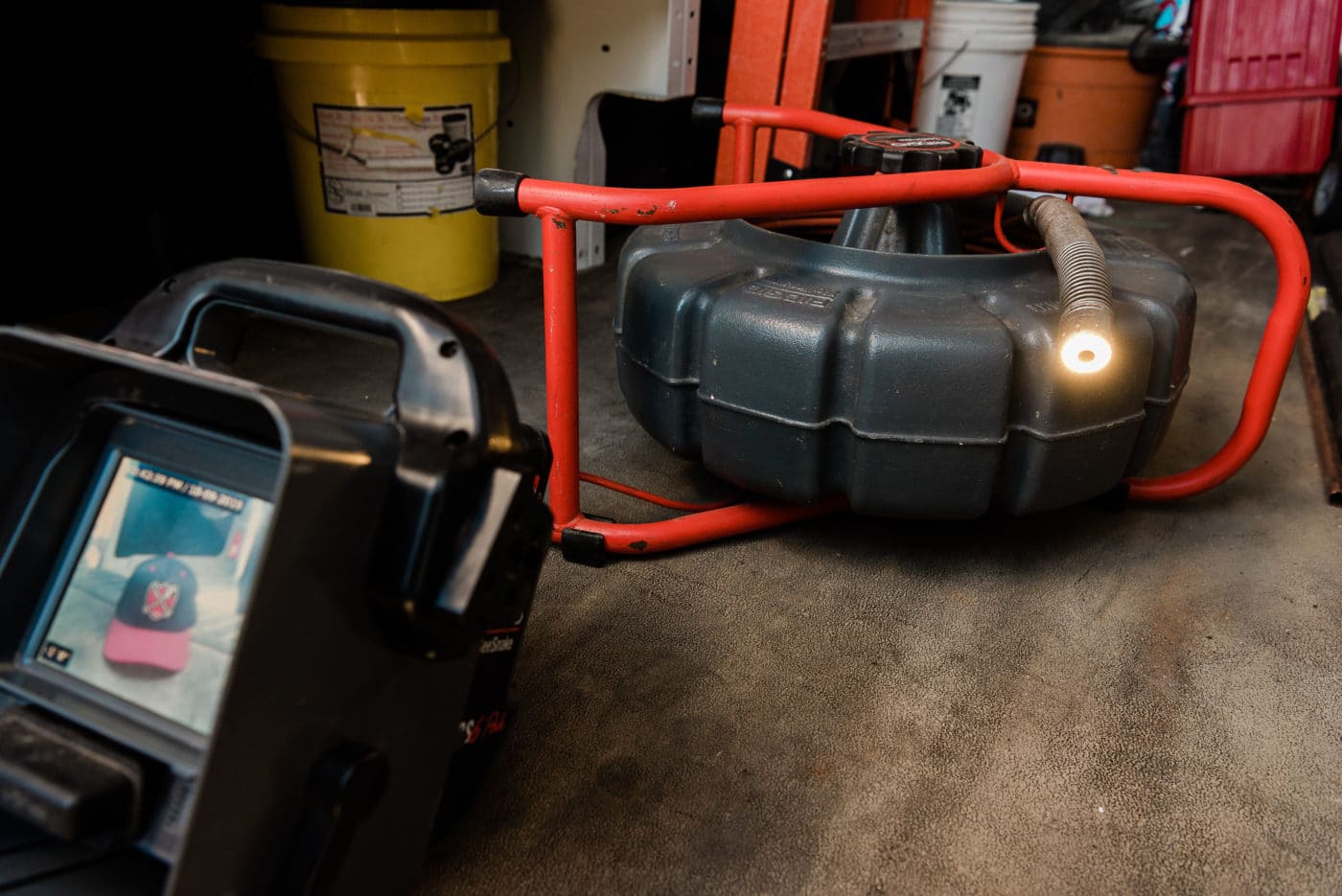
A sewer camera inspection is the only way to know exactly what’s happening inside your sewer line. We’ll run a camera through the pipe, show you the footage, and explain what we’re seeing — roots, cracks, bellies, offsets, or a clean line.
Step 3: Understand your repair options
Not every sewer problem requires digging up your yard. Depending on what we find, your options might include:
- Hydro jetting — high-pressure water clears roots and buildup from the line
- Spot repair — we excavate and replace just the damaged section
- Trenchless pipe lining (CIPP) — a resin-coated liner is inserted and cured inside the existing pipe, sealing cracks and joints without digging
- Pipe bursting — the old pipe is broken apart while new pipe is pulled through in one pass
- Full replacement — when the line is too far gone for repair
We’ll walk you through the pros, cons, and costs of each option so you can make an informed decision.
Common Causes of Sewer Line Damage in Snohomish County
Understanding why sewer lines fail can help you stay ahead of problems:
Tree roots
The #1 cause of sewer line damage in our area. Roots seek out moisture and nutrients, and your sewer line is a buffet. They enter through tiny cracks or joints and grow until they block the pipe entirely.
High-risk trees: Willows, poplars, maples, and any large tree within 20–30 feet of your sewer line.
Age
Older homes in Mukilteo, Everett, Lynnwood, and surrounding areas often have clay or cast iron sewer pipes. These materials were standard decades ago but deteriorate over time — clay cracks and roots invade; cast iron corrodes from the inside out.
If your home was built before 1980, the original sewer line may be nearing the end of its useful life.
Ground movement
The Pacific Northwest’s soil shifts with moisture and seismic activity. Over time, this can cause pipes to separate at joints, sag into “bellies,” or crack under pressure.
Flushing the wrong things
“Flushable” wipes, feminine products, paper towels, and grease don’t break down like toilet paper. They accumulate in the line and create blockages — or make existing problems worse.
How Often Should You Inspect Your Sewer Line?
For most homeowners, a sewer scope every 3–5 years is reasonable — more often if you have large trees near the line or an older home with clay or cast iron pipes.
You should definitely scope your sewer if:
- You’re buying a home (always, always, always)
- You’ve had recurring drain backups
- Your home is 40+ years old and has never been scoped
- You’re noticing any of the warning signs above
A sewer scope costs a fraction of what a surprise replacement costs. It’s one of the best investments you can make in your home’s plumbing health.
Sewer Line Problems? Let’s Take a Look.
If you’re noticing warning signs — slow drains, gurgling, odors, wet spots in the yard — don’t wait for a backup. We’ll scope the line, show you exactly what’s going on, and give you honest options for repair.
Call 425-374-3909 · Request a Quote
Related articles:
- What Is a Sewer Scope? — how camera inspections work and why they matter
- Sewer Repair in Mountlake Terrace — a real sewer repair case study
Related services:
- Sewer Line Repair — diagnosis, repair, and replacement options
- Sewer Scope Inspection — camera inspections for accurate diagnosis
- Hydro Jetting — high-pressure cleaning for stubborn blockages
Stollwerck Plumbing & Sewer · Mukilteo, WA · WA License #STOLLPL780CJ