What we actually measure on houses in Everett, Mukilteo, Edmonds, and Lynnwood
We put a gauge on a hose bib on almost every service call we run, which means we have a lot of readings from real houses in this specific market. Here are the questions customers ask about water pressure, answered with those numbers rather than with national averages.
How do I check my own water pressure?
Buy a screw-on pressure gauge — they cost about fifteen dollars at any hardware store — and thread it onto an outdoor hose bib with everything in the house shut off. Open the tap fully and read it. That is static pressure, and it is the number that matters most.
What is the highest water pressure you have measured in Snohomish County?
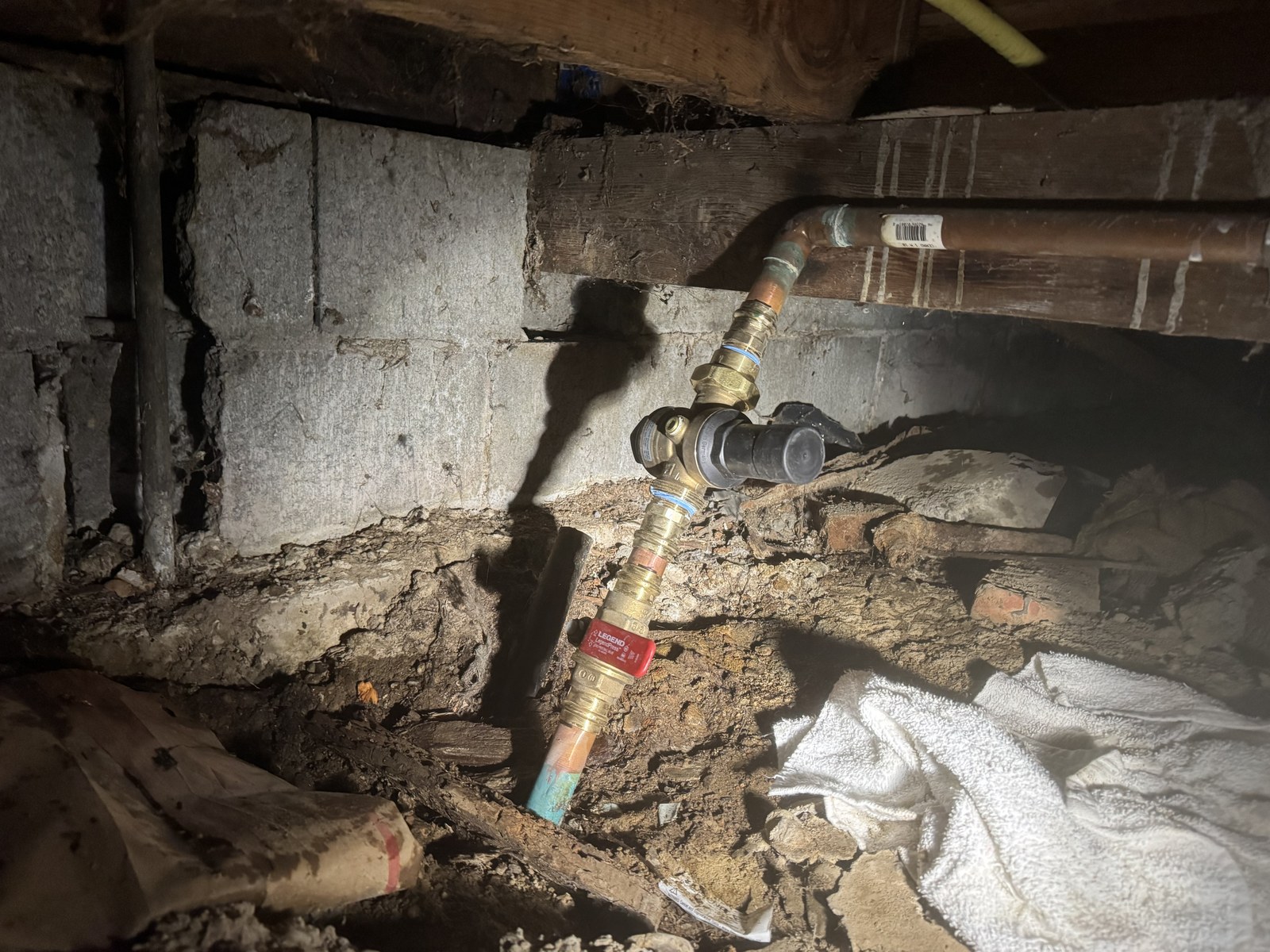
140 psi, at a house near Shore Avenue in south Everett. We replaced the pressure-reducing valve and brought the house down to 60 psi. A place on Taylor Drive in Everett gauged 110 psi, and in Mukilteo the highest recent reading in our records is 95 psi.
Why does my neighbor have different water pressure than I do?
Elevation, almost always. Water pressure inside a distribution zone depends on how far below the reservoir feeding it your house sits. A home down near the Everett waterfront carries far more static pressure than one up on higher ground a few streets away, even though both are on the same main and the same utility.
Where does Everett and Mukilteo tap water come from?
Spada Lake, on the upper Sultan River about thirty miles east of Everett. Everett filters and distributes it, then wholesales it onward to Mukilteo Water & Wastewater District, Alderwood, Silver Lake, and roughly a hundred other systems — supplying more than three-quarters of Snohomish County from one source.
What does high water pressure damage first?
The cheap parts, in this order: toilet fill valves and flappers, faucet cartridges, angle stops, braided supply lines, then hose bibs. After those come the expensive ones — the water heater’s fittings and relief valve, and eventually pinholes in the supply piping itself. Nothing fails dramatically; everything fails early.
Can I adjust my PRV myself?
You can turn the adjusting screw, but you should gauge while you do it, and a valve that will not hold a setting is finished rather than out of adjustment. If a PRV is more than about fifteen years old and reading above 80 psi, adjusting it buys weeks, not years.
Is low water pressure the same thing as low flow?
No, and confusing the two sends people down the wrong path. Low pressure means the whole system reads low on a gauge. Low flow means pressure is fine but not enough water arrives at one fixture — usually a clogged aerator, a failing cartridge, or a partly closed shutoff on that line alone.
How often should I check my water pressure?
Once a year is plenty for most homes, plus any time something changes — a shower that suddenly feels stronger or weaker, banging pipes, or a relief valve that starts dripping. We gauge it on every service call anyway, at no charge, so if we have been out recently you already have a reading.
Our Recommendation
If you have never had your pressure measured, do it before you replace another fixture. Anything over 80 psi is above the code limit and is quietly shortening the life of every valve in the house, and a $15 gauge will tell you in two minutes whether that is your problem. If it reads high, a pressure-reducing valve is a one-time fix that protects everything downstream of it.
Related: water pressure testing and PRV replacement · thermal expansion tanks explained · water heater service · plumbing in Everett